Tag: Foodservice Roadmap

  • Supply Chain Risk: Managing Ingredient Substitutes and Allergen Disclosure

    Supply Chain Risk: Managing Ingredient Substitutes and Allergen Disclosure

    Managing Ingredient Substitutions and Allergen Compliance Under SB-68

    Your Menu Moves Fast, Make Sure Allergen Data Moves Faster.

    Under the Allergen Disclosure for Dining Experiences (ADDE) Act, restaurant chains with 20 or more U.S. locations must keep allergen information accurate and easy to check. Ingredient swaps — from stock shortages or vendor changes — are a common cause of mislabeling in inspections.

    SB-68 expects operators to know what’s in their ingredients. For example, if a dairy-free spread is swapped for butter without approval, the allergen info is immediately wrong — and you could be non-compliant.

    Documented substitution protocol

    To comply with SB-68, operators should follow a clear, trackable process for ingredient swaps. The steps below match California Department of Public Health (CDPH) standards for allergen checking and traceability.

    Step Action Outcome
    1. Keep an approved substitute list Each recipe lists approved alternative ingredients. Substitutes must have the same allergens and be verified in your system. Prevents unapproved swaps from being used.
    2. Require manager or QA approval No substitutions without OK from an Allergen Champion or QA lead. Ensures accountability before items reach guests.
    3. Update allergen info centrally Approved swaps automatically update allergen info across all menus — print, digital, and delivery. Keeps allergen data consistent everywhere.
    4. Keep a change history System logs who approved the swap, when it happened, and which menus were updated. Creates a clear audit trail for inspections.

    Cross-contact risks during substitutions

    Swapping ingredients can create cross-contact risks, especially with new vendors or production lines. Even if the item looks similar, allergens can differ. Examples:

    Substitution Scenario New Risk Required Action
    Vendor A’s soy-free mayo is replaced by Vendor B’s version B’s mayo contains egg Update allergen info from “Soy” to “Egg” and get manager approval
    Canola oil swapped with refined peanut oil Introduces a major allergen Update allergen info and fryer cross-contact statements immediately
    Proprietary wheat flour replaced with local generic May contain undeclared soy or milk stabilisers Verify top 9 allergens before approval

    Verification and recordkeeping

    Digital menu tools automate SB-68 documentation, track every change, and show real-time allergen control — replacing manual logs.

    Record Type Purpose Example
    Allergen review log Tracks who approved each swap Timestamped approval records in the system
    Menu verification proof Shows which allergen info was live at a given time Export or screenshot of menu with timestamps
    Vendor confirmation Confirms allergen info from manufacturer or distributor Stored PDFs, declarations, or synced vendor data
    Change log Tracks all edits to recipes and menu info Automatic log entries with version history
    Pro tip: Inspectors may ask, “How do you know this allergen info is current?” A central digital record of swaps and approvals shows you have “reasonable knowledge,” which SB-68 expects.

    Ingredient swaps happen fast — your allergen info must keep pace.

    Stay compliant when ingredients change

    Access expert tools to manage substitutions, verify allergens, and meet SB-68 requirements at every location.

    Ask an expert Download resources See legislation

    Context: California Senate Bill 68 (ADDE Act) makes written allergen disclosure mandatory for restaurant chains with 20+ locations by July 2026.


  • Precautionary Allergen Labeling (PAL): How Can Your Team Manage Cross-Contact Risk?

    Precautionary Allergen Labeling (PAL): How Can Your Team Manage Cross-Contact Risk?

    Precautionary Allergen Labelling (PAL): Managing Supply-Chain and Operational Cross-Contact Risks

    Understanding Precautionary Allergen Labelling (PAL)

    Precautionary Allergen Labelling (PAL), such as “may contain” or “produced in a facility that also processes,” is voluntary under California’s SB-68 (ADDE Act). While allergen disclosure for known ingredients is mandatory, PAL statements are optional. Applied correctly, PAL demonstrates proactive risk management and transparency for your business.

    Types of PAL

    There are two main types of PAL in foodservice, each with distinct origins and purposes:

    Type Definition Typical Source Example Statement
    Supply-Chain PAL Issued by manufacturers or distributors to indicate possible cross-contact during production or packaging. Supplier allergen declarations, spec sheets, or packaging. “Manufactured in a facility that also processes peanuts.”
    Operational PAL Applied by operators to reflect potential cross-contact during storage, preparation, or service. Shared fryers, cutting boards, utensils, or prep surfaces. “Prepared in a kitchen that handles milk, eggs, soy, and wheat.”

    Understanding the distinction between supply-chain and operational PAL helps operators apply statements only where justified and maintain credibility with guests.

    Applying PAL Responsibly

    PAL should never be applied indiscriminately. Using it selectively protects your brand and ensures meaningful communication to guests.

    • Apply selectively: Use PAL only where cross-contact risks are verified and cannot be fully controlled.
    • Document rationale: Record why PAL was applied — whether due to supplier information or operational limitations.
    • Review regularly: Remove PAL statements once risks are mitigated or suppliers confirm allergen segregation.
    • Ensure consistency: Apply identical PAL language across printed, digital, and delivery menus.

    Following these practices ensures PAL statements remain credible and genuinely informative for guests.

    Inspection Readiness and Documentation

    Although PAL is voluntary, regulators and auditors may view it as a sign of proactive allergen management. Proper documentation demonstrates diligence and accountability.

    • Supply-chain PAL: Keep supplier statements or allergen spec sheets attached to ingredient records.
    • Operational PAL: Maintain prep-area risk assessments, cleaning logs, and staff SOPs.
    • Staff Training: Include PAL policies in onboarding and refresher sessions to ensure team understanding.
    Pro tip: If asked why a dish says “may contain soy,” you should be able to point to either a supplier declaration or a documented in-house cross-contact assessment.

    Accurate records and staff awareness support your compliance efforts and protect both guests and your operation.

    Apply Precautionary Allergen Labelling (PAL) selectively and document every decision to maintain trust and demonstrate proactive allergen management.

    Strengthen Your Allergen Management Program

    Access expert guidance and tools to document PAL decisions, verify supplier data, and ensure your allergen program meets SB-68 expectations.

    Ask an Expert Download Resources View Legislation

    Context: The California ADDE Act (SB-68) requires allergen disclosure for restaurant chains with 20 or more U.S. locations by July 1, 2026. While PAL remains voluntary, documenting it supports transparency, demonstrates due diligence, and reinforces continuous improvement in allergen control.


  • Creating a Digital Training Record System for SB-68 Audits under the ADDE Act

    Creating a Digital Training Record System for SB-68 Audits under the ADDE Act

    Creating a Digital Training Record System for SB-68 Audits under the ADDE Act

    Keeping Staff Training Audit-Ready Across All Locations

    California’s Allergen Disclosure for Dining Experiences (ADDE) Act requires proof of staff training. Digital training records let you show that every employee across all locations is up to date on allergen knowledge, so you’re ready for any audit.

    Supporting Your Team with Digital Food Data Management

    Modern digital food data systems automatically update your menus whenever recipes or ingredients change. This means your staff always has the latest allergen information at their fingertips.

    Paired with targeted training, these systems reduce errors and give staff confidence to answer customer questions, manage cross-contact risk, and maintain compliance under the ADDE Act and SB-68 audits.

    • Automatic Menu Updates: Changes to recipes, ingredients, or supply chain details are instantly reflected across all digital and printed menus.
    • Staff Alerts: Your team is notified whenever key allergens are added or removed from a dish.
    • Training Refreshers: Alerts can link to short training modules or refreshers to keep staff knowledge current.
    • Audit Trail Alignment: All updates are timestamped and linked to staff acknowledgments, creating a complete audit trail.

    This close connection between your menu system and staff training ensures consistency, reduces mistakes, and makes audits simpler across multiple locations.

    Key Features of a Digital Training Record System

    Here’s a snapshot of the core features you’ll want in your digital training system, along with what they do and the results you can expect –

    Feature Purpose Example Output
    Centralized DashboardSee completion rates, overdue modules, and retraining alerts across all sites in one place.Color-coded compliance map for all locations.
    Automated RemindersPrompt retraining after menu or staff changes to stay audit-ready.Email or SMS notifications triggered by ingredient updates.
    Role-Based AccessControl who can edit and who can view training records.Digital permission logs with timestamps for accountability.
    Integrated Evidence StorageKeep certificates, acknowledgments, and policy sign-offs in one place.Exportable training packets ready for audits.
    Audit Trail LinkageLink training logs with recipes, vendors, and menu updates for full traceability.Training data automatically included in audit reports.

    With these features in place, you can confidently show regulators that your staff training is complete, up to date, and connected to the actual menus your guests see.

    Implementation Checklist

    To get your digital training record system up and running, follow this simple checklist:

    • Adopt a learning management or compliance platform integrated with your menu data.
    • Upload historic paper records to create a continuous digital timeline.
    • Give each employee a unique ID linked to role-specific training modules.
    • Schedule automatic refresher reminders at set intervals or whenever allergens change.
    Digital audit logs cut inspection prep time from hours to minutes. One exported file can prove compliance for staff training, menu updates, and vendor traceability all at once.

    In short, integrating your menu system with a digital training record platform keeps staff allergen knowledge current, auditable, and linked to real-time menu data. This reduces risk and makes multi-location compliance much easier.

    Automate Your Allergen Training Compliance

    Digitize training logs, automate reminders, and connect staff readiness directly to allergen data for smooth SB-68 audits.

    Talk to an expert Explore ADDE resources Read the legislation

    Context: The Allergen Disclosure for Dining Experiences (ADDE) Act applies to restaurant chains and contract caterers with 20 or more U.S. locations. It requires accurate allergen data disclosure by July 1, 2026 under the oversight of the California Department of Public Health (CDPH).

  • Specials and LTOs: Ensuring ADDE Act Compliance on Temporary Menus

    Specials and LTOs: Ensuring ADDE Act Compliance on Temporary Menus

    Specials and LTOs: Managing Temporary Menu Items

    Managing Temporary Menu Items

    Temporary or limited-time menu items (often called LTOs) are a common feature in foodservice. These can include seasonal specials, event-themed promotions, or trending dishes. Even short-term items need accurate allergen tracking to reduce risk for guests and maintain operational consistency.

    What is an LTO?

    • Seasonal specials e.g., summer BBQ tacos or winter soups
    • Holiday-themed dishes e.g., Valentine’s Day desserts
    • Event tie-ins e.g., Super Bowl wings or St Patrick’s Day pairings
    • Limited promotions of trending flavours e.g., dense bean salads
    • Flash offers for a weekend or single day e.g., discounted combo meals

    A limited-time offer (LTO) is a menu item, dish, drink, or promotion available only for a defined period. LTOs create temporary excitement and encourage guests to try new offerings.

    Managing allergens on temporary menu items can be tricky. LTOs change often, ingredients may differ from your core menu, and staff don’t see them every day.

    Make sure your team knows each item’s allergens and are trained consistently so mistakes don’t happen.

    Operational Workflow and Digital Controls for LTOs

    Temporary items often move quickly from concept to menu board, leaving little time for verification. Even small operational changes — like a supplier swap or regional ingredient variation — can create blind spots if not tracked. The following workflow combines recipe review, menu management, and digital controls to help operators maintain accuracy for each LTO.

    Step / Scenario Action / Risk Outcome / Digital Control
    1. Capture and review recipe List every ingredient, topping, and garnish before launch. Risk: missing allergen information in toppings or sprinkles. Ensures accurate, verified allergen data from suppliers.
    2. Enter data centrally Add the recipe to your digital menu system. Risk: inconsistency between menu formats. Maintains consistency across printed, online, and in-store menus.
    3. Require QA or allergen champion sign-off Each LTO must be approved before release. Risk: unverified items added to menus. Demonstrates a review process with time-stamped records in your system.
    4. Verify menu presentation Check allergen icons and disclosures in all menus. Risk: errors in delivery apps or printed menus. Prevents mismatches during inspections or guest ordering.
    Supplier or regional variations Example: a wheat-free bun replaced by a wheat version mid-promotion. Systems automatically flag and update allergen data.
    Premature menu publishing LTO added to apps before allergen verification. Release items only after QA sign-off for point-of-order accuracy.

    Recordkeeping for LTOs

    Inspectors may request evidence during a review or investigation – so make sure all items are covered in all allergen processes. Every temporary item should generate a digital record showing who verified it, when it was approved, and which data sources were used.

    Record Type Purpose Example Evidence
    Allergen review log Documents who verified the recipe and allergen list before launch. Automatically created within digital menu systems.
    Menu version capture Shows what allergen disclosures were live at any time. Export or screenshot of digital and printed menus with timestamps.
    Supplier confirmations Verifies that allergen data came directly from manufacturers or distributors. Stored PDFs, emails, or API-linked records from suppliers.
    Change management log Tracks edits made during the promotional period. Version control entries when allergen or ingredient data is updated.
    Pro insight: Inspectors focus on how you know your allergen data is current. A centralized, time-stamped workflow — even if partly manual — demonstrates careful operational management.

    Proper management of LTOs ensures guest safety, maintains menu accuracy, and supports smooth operations across locations.

    By integrating workflow, digital controls, and recordkeeping, operators can confidently manage temporary menu items while minimising risk for their guests.

    Access Tools for Managing LTOs

    Download checklists, templates, and guidance to validate allergen data, document approvals, and maintain accurate menu records for all temporary items.

    Ask your question to an expert Download resources

    Context: All temporary menu items should be managed consistently, with verified allergen information available for all service channels.

  • Digital and Print: How to Provide Mandatory Written Allergen Disclosures Under California SB-68

    Digital and Print: How to Provide Mandatory Written Allergen Disclosures Under California SB-68

    Digital & Print Allergen Disclosures: California SB-68 Compliance

    Ensure all guests can safely enjoy your menu – QR codes aren’t enough!

    The California Allergen Disclosures for Dining Experiences (ADDE) Act, SB-68 requires restaurant chains with 20 or more U.S. locations to provide written allergen information for every menu item from July 2026.

    How Should Allergens Be Shown?

    Allergen information should be consistent, legible, and as visible as other menu details. Acceptable formats include:

    Format Use Case
    Digital Menu Online or tablet menus for real-time updates.
    QR Code Menu Quick access via smartphones; must be supplemented with written option.
    Printed Menu Standard or allergen-specific menus for guests without devices.
    Combination Digital & Print Ensures accessibility and inspection readiness.
    Digital Screens Displays allergen info in front-of-house; supplement with written material.
    Other Written Materials Allergen charts, grids, booklets, binders, or other accessible materials.

    While digital menus and QR-linked disclosures are easier to update, the law requires a written option for guests and inspectors at all times.

    Do you know why written allergens are always required?
    Allergen information should be readily available to all customers, without any barriers. As digital menus and QR codes may require having a phone and having internet – these are seen as “steps” or barriers to seeing the allergen information.

    What Are “Alternative Methods”

    Where allergens are shown digitally, an alternative method must also be provided for customers who are not able to access the digital format. Alternate written formats include any physical or printed version of allergen information. Guests, inspectors, or staff may request them. Keeping a clear, up-to-date written record is a key step in complying with the ADDE Act.

    Acceptable formats include the following –

    Written Format Type Use Case Compliance Advantage
    Printed Allergen Menu Displayed at host stands or provided upon request. Ensures accessibility for all guests and demonstrates readiness during inspection.
    Allergen Chart Shows allergens by menu item and ingredient source. Easy comparison and guest reference; aligns with inspection requirements.
    Allergen Grid Structured table format per menu item. Provides clear visual accessibility and consistency across locations.
    Allergen Booklet Comprehensive booklet of allergens and ingredient details. Supports audit readiness and detailed guest queries.
    Other Written Materials Binders, folders, or alternative methods accessible to guests and staff. Demonstrates compliance and operational transparency.
    A centralized allergen database with on-demand printing ensures both digital and written disclosures are consistent, reducing duplication, errors, and audit risk.

    Integrating Written Allergen Formats into Operations

    • Follow the Regulation
      Ensure every menu and digital display meets California SB-68 requirements. If unsure, always check the regulation or consult a regulatory expert.
    • Written Allergens as Standard
      Include clear steps for producing, approving, and presenting printed allergen menus or charts in standard operating procedures.
    • Use Consistent, Verified Data
      Confirm allergens match updated recipes. For example, “Milk” may appear as “Caseinate,” and approved icons can clarify allergens for guests.
    • Maintain Accessibility
      Use large, legible fonts, clear terminology, and visual cues so all guests can read and understand allergens quickly.
    • Train Staff
      Ensure front-of-house teams can locate, present, and explain allergen information confidently, supporting both guest safety and inspection readiness.

    Following these steps ensures guests can safely access allergen information, fulfilling both legal requirements and best practices for inclusive dining.

    Centralize and Simplify Allergen Compliance

    Generate digital and printed allergen menus instantly, ensuring consistency, accessibility, and compliance across every location.

    Talk to an expert Access resources Read the legislation

    Context: California Senate Bill 68 (ADDE Act) requires restaurant chains with 20 or more U.S. locations to provide accurate allergen disclosures on all menus by July 1, 2026. It amends Section 113820.5 and adds Section 114093.5 to the California Health and Safety Code (HSC).

  • Icons or Words? Choosing Between Common Names and Standardized Pictograms for Allergen Disclosures

    Icons or Words? Choosing Between Common Names and Standardized Pictograms for Allergen Disclosures

    Allergen Disclosure Format Options under SB-68

    Learn how to show allergens to your guests on menus

    The California Allergen Disclosure Law (SB-68, ADDE Act) requires restaurant chains with 20 or more locations to display written allergen information for all menu items. Operators can choose between two compliant disclosure methods: Common Names or Standardized Pictograms.

    This choice affects not only menu design but also how allergen systems and data feeds connect. By July 1 2026, every menu format — printed, digital, and alternate written copies — must follow the same chosen approach at every California site.

    How Can I Show Allergens on Menus?

    This table summarises the two SB-68-approved methods, highlighting format, pros, cons, and practical considerations for menus.

    Option Description Pros Cons
    Common / Usual Names (Text-Based) Lists allergens by name next to or beneath each menu item. Familiar to staff and integrates easily with digital systems. Accuracy and clarity: guests see exact allergen names, reducing confusion and ambiguity for customers with severe allergies. Menu space: text listings can crowd printed menus if items contain multiple allergens.
    Standardized Pictograms (Visual) Uses simple icons (e.g., peanut symbol for “Peanuts”) to make menus cleaner and easier to scan, especially for guests with limited English proficiency. Visual efficiency: icons reduce text clutter and allow guests to identify allergens quickly on both printed and digital menus. Standardization required: icons must follow SB-68 rules. Must include a legend linking each icon to its allergen (e.g., 🌾 = WHEAT).

    Best practice

    Because SB-68 also requires an “alternate written format” (a printed chart or binder for inspectors and guests), most operators benefit from using both methods together. This hybrid approach combines the visual clarity of pictograms with the audit-ready reliability of text listings.

    Disclosure Format Recommended Strategy
    Digital Menu (QR Code or App) Use standardized pictograms for quick scanning, with links to detailed text-based allergen statements.
    Printed Menu Display pictograms beside each dish and include a clear allergen key or legend at the bottom of the page.
    Alternate Written Format (Binder or Chart) List full allergen names in a structured table or grid for inspectors and guests — this serves as the “master record.”
    Design compliance tip: Your menu-management system should update every version of your allergen data automatically when an ingredient changes.

    The most common mistake with allergen disclosures is inconsistency between printed menus, digital platforms, and written reference files. Look for a food or menu data management system that allows you to export your real-time data and allergens in multiple formats (i.e. digital menu, QR codes, print menus, allergen matrices).

    Consistent allergen disclosures across all menu formats – whether text or pictogram – are essential for compliance and customer safety.

    Ready to optimize your allergen disclosures?

    Access practical tools and expert resources to help you maintain consistency across digital, printed, and written allergen menus under SB-68.

    Ask your question to an expert Download resources See official legislation

    Context: California Senate Bill 68 (ADDE Act) mandates allergen disclosure for restaurant chains with 20 or more locations by July 1 2026. It amends Section 113820.5 and adds Section 114093.5 to the California Health and Safety Code (HSC).

  • Passing an Inspection: How to Prepare for Allergen Audits under SB-68 and the ADDE Act in California

    Passing an Inspection: How to Prepare for Allergen Audits under SB-68 and the ADDE Act in California

    Passing an Inspection: How to Prepare for Allergen Audits under SB-68 and the ADDE Act in California

    SB-68 and ADDE Act Audit Readiness for California Restaurant Operators

    Setting up allergen disclosure systems and preparing for inspections can feel intimidating, especially as operators manage multiple operational pressures. Clear digital allergen systems give your team confidence, provide an evidence base, and support your due diligence under SB-68 and the ADDE Act.

    What Inspectors Are Looking For

    Inspectors will check that your business has:

    • Mapped all menu items to the nine major allergens (including sesame).
    • Maintained updated records for menu versions, recipes, and vendor/broadliner ingredient information.
    • Demonstrated staff training and awareness about allergen disclosure and safe handling.
    • Clear documentation showing the source and verification of allergen information.

    SB-68 requires disclosure of allergens that a facility “knows or reasonably should know” are in a menu item. Inspectors are assessing whether you have made a reasonable, documented effort to comply, meaning documented procedures, validated ingredient data, and trained staff. The goal is to show that your team has taken all practical steps to identify and disclose allergens, even if perfection is not possible.

    Step 1: Conduct a Self-Audit

    Use a checklist to verify:

    Audit QuestionFocus AreaStatus (Y / N / NA)
    Have all menu items been mapped to the nine major allergens?Allergen mapping
    Is there a change log recording every allergen update (with date, user, reason)?Version control
    Are vendor/broadliner allergen declarations validated regularly when formulations change?Vendor validation
    Do printed, digital, and alternative menus show identical allergen information?Disclosure consistency
    Do staff know how to escalate guest allergen questions and reference source data?Staff competence
    Are training logs maintained and available for inspection?Training records
    Has the site run mock audits or spot checks in the prior quarter?Verification & internal QA
    Audit readiness tip: When asked “where did this allergen data come from?”, show the chain from vendor/broadliner documentation → recipe record → menu version → printed or digital output.

    Step 2: Build a Defensible Digital Audit Trail

    • Traceable data flows: Connect vendor/broadliner specs to recipes and menu outputs with date-stamped records.
    • Version history: Keep archived records of menu updates and recipe changes for reference.
    • Operational dashboards: Set up quick export tools or dashboards for auditor review.
    • Training accountability: Maintain signed staff records and refresher training logs.

    Step 3: Support Your Team with Training & Procedures

    • Provide scripts and escalation flow for guest queries.
    • Highlight safe handling and cross-contact prevention in kitchen SOPs.
    • Use a quick reference checklist for staff to follow if a guest asks about allergens.
    • Regularly refresh critical changes, especially reformulated ingredients.

    Step 4: Be Audit Ready

    • Run mini site audits weekly on select menu items to trace allergen paths.
    • Maintain printed summaries, SOP cheat sheets, and inspection toolkit for staff.
    • Lock past menu versions for historical reference.
    The goal is to show that your team has taken all practical steps to identify and disclose allergens, even if perfection is not possible.

    By implementing clear systems, maintaining accurate records, and ensuring staff are trained and confident, your business can approach SB-68 and ADDE Act inspections with assurance, knowing you have a defensible process and evidence to support every decision.

    Get inspection-ready now

    Download the full compliance checklist (30+ questions) and audit your allergen processes. Be ready when SB-68 and ADDE Act inspections begin.

    Download the Checklist & Resources
  • Recipe Systems vs. POS Menus: Closing the Allergen Data Gap

    Recipe Systems vs. POS Menus: Closing the Allergen Data Gap

    Closing the Allergen Data Gap

    RMM systems keep allergen information consistent across menus

    Recipe and Menu Management (RMM) systems store validated ingredient, nutrition, and allergen information. POS and digital menus display this information to guests. When these systems are not integrated, guest-facing menus may show outdated or incomplete allergen information — even if the kitchen data is accurate.

    Why consistent allergen data matters

    SB-68 requires operators to disclose allergens they “know or reasonably should know.” Maintaining a single source of truth in the RMM system ensures allergen information is accurate, verifiable, and consistently shared across all guest-facing channels.

    Using an RMM system ensures recipe updates propagate automatically to POS and digital menus, reducing errors and supporting compliance.

    Where allergen data can go wrong

    Even with a validated RMM system, inconsistencies can appear when data is manually handled or systems are disconnected. The table below outlines common challenges for operators:

    Risk Area Typical Operator Challenge
    Manual menu updates Allergen info may not match current RMM data when entered into POS or digital menus.
    Ingredient or supplier changes Updates in recipes may not propagate to all guest-facing menus promptly.
    Disconnected systems POS, RMM, and digital menus managed separately, creating inconsistencies.
    Menu truncation or display limits Allergen notes may be cut off or inconsistently displayed on digital menus.
    Seasonal/special menus Temporary dishes may not be uploaded to POS and digital menus consistently.
    Staff turnover/training gaps New or temporary staff may miss steps for updating allergen information correctly.
    On-site ingredient substitutions Changes in prep (e.g., swapped ingredients) may not be reflected digitally immediately.

    Operational best practices

    • Integrate systems: Connect RMM with digital menus for automatic updates.
    • Lock allergen fields: Prevent manual edits in POS; validated data should always come from RMM.
    • Track updates: Version control and timestamps maintain a clear audit trail.
    • Regular audits: Compare live menus with RMM data to confirm accuracy.
    • Team coordination: Culinary ensures data accuracy; digital operations ensures correct display.

    Maintaining a single source of truth, and integrating your digital systems can reduce errors and ensures safe, consistent service for every guest.

    Ensure Your Menus Reflect Accurate Allergen Data

    Discover how centralized recipe and allergen management supports safe, compliant operations across POS and digital menus.

    Talk to an Expert Download Resources

    Context: California’s ADDE Act applies to restaurants with 20 or more US locations and requires public allergen disclosure by July 1, 2026. Accurate, centralized allergen management is a critical operational standard.

  • Building a Single Source of Truth for Allergen Information From Supplier Data to Menu Disclosure

    Building a Single Source of Truth for Allergen Information From Supplier Data to Menu Disclosure

    Vendor Data to Menu: The Operational Traceability Chain for ADDE Act Compliance

    Vendor Data to Menu: The Operational Traceability Chain for ADDE Act Compliance

    Compliance with the Allergen Disclosure for Dining Experiences (ADDE) Act begins with accurate ingredient data. This data starts and ends with your vendors and broadliners. Any error in a raw specification sheet, or delay in communicating a product change, immediately impacts every recipe and menu disclosure downstream.

    For multi-location operators, establishing a direct, verified pipeline for food information is the most critical operational priority. Without it, every kitchen and menu operates at a high, unmanageable risk.

    Importantly, digital systems are essential to handle the volume and volatility of this data. A centralized platform ensures the allergen information from the vendor matches exactly what your guests see, greatly reducing legal and operational risk.

    Setting up the Vendor Data Pipeline

    Moving from emailed PDFs and manual input to a centralized digital system requires clear protocols and automated tools.

    In the U.S., vendors and broadliners are typically not legally required to provide digital allergen data. The responsibility for accurate data falls on the restaurant operator. Therefore, companies should make digital provision of food data a non-negotiable requirement in all contracts. This ensures your business has the necessary information for accurate ADDE Act disclosure.

    These protocols minimise the manual “data entry risk window”. Implementing the following steps ensures your vendor data is clean, current, and audit-ready:

    • Direct Integration or Portal Access: Vendors upload product specifications directly to your platform, bypassing emails.
    • Mandatory Fields: System requires verified data points, including the Top 9 U.S. allergens, cross-contamination warnings, and time/date stamps for version control.
    • Automated Data Flow: Once approved, vendor data instantly applies across all dependent recipes and menus.

    Common Pitfalls in Ingredient Data Verification

    Ingredient-level data from vendors and broadliners is critical for allergen disclosure. Even with automation, operators must check for incomplete or missing data before menu updates.

    1. Vendor Data Sharing – Vendors are not legally mandated to share data. Make digital sharing a contract requirement.

    2. Supply Chain Substitution Risk – If ingredients run out, staff should use approved alternatives. Recipes and menus update in real time.

    3. Product Reformulation – Minor ingredient changes can introduce new allergens. Digital systems must monitor ingredient lists, not just allergen boxes.

    4. Minor Ingredients Missing – All components, including flavorings, spices, or conditioners, must be listed. Undeclared allergens like soy or wheat may appear otherwise.

    5. “May Contain” Data Gaps – Including potential cross-contamination alerts builds trust and reduces liability, even though the ADDE Act does not mandate it.

    Managing Product Information Changes and Recalls

    Delayed response to product changes or recalls is a major operational risk. A centralized digital system ensures these events are handled swiftly.

    The table below shows why automation is essential for multi-location operators:

    Operational Event Manual Process (High Risk) Centralized Digital System (Low Risk)
    Product Change Vendor emails procurement; kitchens manually alerted via printed memos. Vendor updates specifications; system sends instant automated alerts to culinary staff, front-of-house (FOH) teams, and back-of-house (BOH) teams.
    Menu Update Time Days or weeks required to print new menus or manually update digital assets across all locations. Allergen data updates centrally, automatically pushing changes to all menu boards and point-of-sale (POS) systems.
    Product Recalls Slow, location-by-location verification of affected batch codes and recipes. System instantly identifies every recipe, menu, and location using the recalled ingredient, enabling immediate removal.
    Verification Check Manual audit required to prove when each location removed the affected ingredient. Audit log shows the exact time the ingredient was removed from all customer-facing menus.

    Success depends on the quality and speed of vendor data. Collaborating with vendors to create a seamless digital information flow is crucial.

    Implementing a single, centralized digital system streamlines vendor data and ensures compliance, protects guests, and safeguards your brand’s reputation.

    Ready to manage your vendor data automatically?

    Access expert guidance, templates, and digital tools to centralize data, automate updates, and support ADDE Act compliance.

    Talk to an expert Explore ADDE resources Read the legislation

    Context: The ADDE Act applies to restaurant chains with 20 or more U.S. locations and requires public allergen disclosure by July 1, 2026. Administered by the California Department of Public Health (CDPH).

  • The 9 Major Allergens Restaurants Must Disclose in California

    The 9 Major Allergens Restaurants Must Disclose in California

    The 9 Major Allergens Restaurants Must Disclose in California

    Learn the 9 Allergens That Must Be Added to Menus and Where to Find Them

    Under the Allergen Disclosures for Dining Experiences (ADDE) Act (SB-68), California restaurants are required to disclose 9 allergens in all menu items.

    Food allergies affect an estimated 32 million Americans, and mislabeling can lead to severe allergic reactions or death. Accurate identification of these allergens across ingredients, recipe and menus is critical for consumer safety and legal compliance. Make sure your team understand the 9 major allergens, and where to find them.

    So, What Are The 9 Major Allergens?

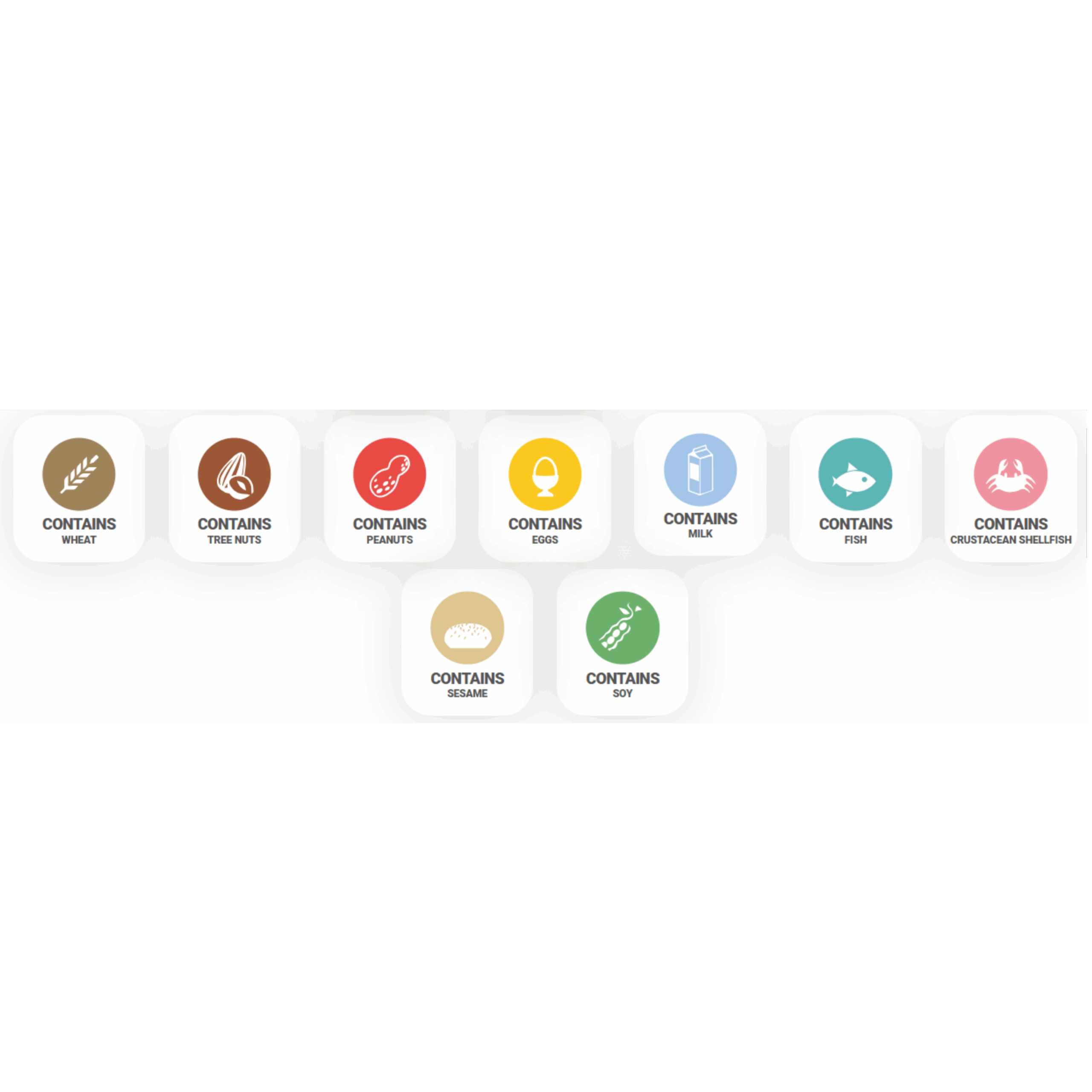
    • Milk
    • Eggs
    • Fish (e.g., bass, cod, flounder)
    • Crustacean shellfish (e.g., crab, lobster, shrimp)
    • Tree nuts (e.g., almonds, walnuts, pecans)
    • Wheat
    • Peanuts
    • Soybeans
    • Sesame

      Sesame was added as the 9th major allergen in 2023 under the federal FASTER Act on prepacked foods,and is also required under the ADDE Act.

    Protein Derivatives

    Allergens must be disclosed for the 9 major allergens and any ingredient made from them. “Protein derivatives” are ingredients that still contain allergenic protein and can trigger a reaction. Protein derivatives can be easy to spot (e.g. peanut butter) while some are not easy to spot (e.g. tahini).

    Hidden allergens can appear in compound ingredients, derivatives, or supplier substitutions. Even with digital menu management systems that help track allergens, staff must understand the 9 allergens and review the information to ensure accurate disclosures and protect guests.

    Some areas to keep an eye on in your operations include –

    • Ingredient derivatives: Watch for whey (milk), casein (milk), soy sauce (soy), and egg lecithin (egg).
    • Multi-component items: Break down sauces, dressings, and toppings — sub-recipe allergens must be declared.
    • Supplier updates: Verify new and reformulated ingredients even when packaging looks the same.
    • Ingredient swaps: Keep a list in the kitchen of safe substitutes for all ingredients so allergens remain accurate.

    • This table contains some examples of allergens, protein derivatives, and where they can be found in a commercial kitchen –

      Allergen Source Sample Protein Derivative Hidden Risk in Menu Items
      Milk Whey, Casein, Lactose, Ghee, Buttermilk, Milk powder Soups, sauces, baked goods, coffee drinks, desserts
      Eggs Albumin, Lysozyme, Lecithin (egg), Dried egg, Egg powder, Egg yolk solids Dressings, glazes, batters, desserts, pasta
      Wheat Modified starch, Semolina, Wheat protein isolate Coatings, sauces, soups, breads, pasta
      Soybeans Tofu, Hydrolysed Vegetable Protein (HVP), Soy lecithin, Miso, Textured vegetable protein (TVP) Sauces, chocolate, meat alternatives, non-stick sprays
      Peanuts Peanut flour, Peanut butter, Peanut oil, Protein isolate, Peanut meal Asian dishes, baked goods, sauces, snacks
      Tree nuts Nut flours, Marzipan, Oils, Almond meal, Cashew paste Salads, desserts, pesto, sauces
      Fish Anchovy, Fish sauce, Fish stock, Fish gelatin, Fish powder Caesar dressing, soups, sauces, seafood broths
      Crustacean shellfish Shrimp paste, Crab extract, Lobster stock, Crustacean protein powder Bisques, stir-fries, shared fryers
      Sesame Tahini, Sesame oil, Seeds, Sesame paste Breads, sauces, dressings, hummus
      Highly refined oils (such as refined peanut or soy oil) are exempt from allergen disclosure under the ADDE Act if they contain no residual protein. Cold-pressed or blended oils may still contain proteins which need to be declared as allergens.

      By understanding the 9 major allergens, operators can ensure no hidden allergens go unnoticed and maintain consistent, safe menu offerings across all locations.

      Ensure Your Menus Are SB-68 Compliant

      Access expert guidance, tools, and templates to accurately identify the 9 major allergens and maintain menu compliance across your California locations.

      Ask an Allergen Expert Download Compliance Resources View SB-68 Legislation

      Context: California Senate Bill 68 (ADDE Act) requires restaurant chains with 20 or more U.S. locations to provide accurate written allergen disclosures on all menus by July 1, 2026. It amends Section 113820.5 and adds Section 114093.5 to the California Health and Safety Code (HSC).

  • Why Spreadsheets Fail for ADDE Act Allergen Management

    Why Spreadsheets Fail for ADDE Act Allergen Management

    Why Spreadsheets Fail for ADDE Act Allergen Management

    Spreadsheets Are Too Risky For Allergen Compliance – Here’s Why

    Spreadsheets have long been a standard tool for tracking allergen data, but for restaurant chains subject to the SB-68 (ADDE Act), they introduce significant risk. Research shows that up to 90% of spreadsheets contain errors, leading to inaccurate allergen declarations, inconsistent menus, and potential compliance failures.

    For multi-location operations, spreadsheets lack:

    • Version control and audit trails.
    • Automated updates from vendors and broadliners.
    • Consistency across digital and printed menus.

    Common Spreadsheet Failures

    The table below illustrates how traditional spreadsheet tracking compares with a centralized digital allergen management system, highlighting key risks at each stage and how automation mitigates them.

    Data Stage Spreadsheet Process Digital Allergen Management
    Vendor / Broadliner Input Allergen declarations sent via email or PDF; manually entered into spreadsheets. Vendors upload or sync data directly, automatically updating dependent recipes and menus.
    Recipe Linking Manual re-entry of allergen data; sub-recipes not always consistent. Ingredient and recipe data link automatically, recalculating allergen values in real time.
    Menu Creation Staff manually transfer allergen information; errors common when items or ingredients change. Menus update automatically across digital and printed outputs from live data.
    Customer Communication Allergen information varies across POS, QR, and printed menus. Centralized system ensures accurate, consistent customer-facing information at all touchpoints.
    Audit & Verification No permanent version history; difficult to prove compliance during inspections. Every change logged automatically with timestamps and user verification—fully audit-ready.
    Tip: Spreadsheets are prone to human error, especially when managing multiple menus and locations. A centralized platform ensures traceability and reduces the risk of compliance failures under the ADDE Act.

    Building a Single Source of Truth

    A centralized food data system connects procurement, recipes, and menu disclosures in one digital environment. Allergen information updates automatically whenever supplier or ingredient data changes. To stay compliant, make sure these foundational components are in place:

    • Data flow documentation: Map the complete allergen data pathway—from supplier → recipe → menu → customer disclosure—and store this documentation centrally.
    • Version control: Maintain a permanent version history of allergen records. Inspectors should be able to see when and why any change occurred.
    • Automated mismatch detection: Use systems that flag inconsistencies (for example, when a supplier spec lists “milk” but the menu doesn’t).

    Ensuring Data Integrity

    Consistency and traceability rely on accurate internal data. Your allergen management platform should include built-in validation and reporting tools that help your QA or food safety teams:

    • Standardize recipes: Make sure every recipe—sauces, dressings, garnishes—is linked to validated ingredient data.
    • Run regular audits: Schedule internal checks to verify that supplier data, substitutions, and menu outputs remain synchronized across systems.
    • Automate updates: When a supplier changes an ingredient or allergen declaration, your platform should update all dependent recipes and menus automatically.

    Connecting Supply Chain Data to Customer Communication

    SB-68 compliance extends beyond your back office. The law requires a transparent, traceable chain of allergen information—from the supplier’s data sheet to the menu a guest sees. Automation reduces risk and increases accuracy at every stage.

    Benefits of Centralized Digital Systems

    • Automatic updates from vendors and broadliners.
    • Real-time recalculation of allergens for every menu item.
    • Consistency across all menu channels (digital, POS, print).
    • Permanent audit trail for regulators and internal QA.

    Moving away from spreadsheets reduces human error, improves operational efficiency, and supports allergen compliance across multi-location operations.

    A central digital allergen system keeps vendor, recipe, and menu data in sync, allowing operators to confidently communicate accurate allergen information to customers, respond quickly to recalls, and maintain a defensible audit trail for inspections.

    This approach provides transparency, control, and confidence that spreadsheets simply cannot deliver.

    Upgrade from Spreadsheets to Digital Allergen Management

    Leverage Nutritics’ connected data tools to automate updates, maintain accurate allergen records, and ensure full ADDE Act compliance across all locations.

    Talk to an expert Access resources Read the legislation
  • SB-68 ADDE Act Compliance Roadmap: 4-Month Plan for U.S. Restaurant Chains

    SB-68 ADDE Act Compliance Roadmap: 4-Month Plan for U.S. Restaurant Chains

    SB-68 Compliance Roadmap: 4-Month Plan for U.S. Restaurant Chains

    Practical 4-month SB-68 compliance checklist for U.S. restaurant chains, franchises, and ghost kitchens

    To prepare for July 1, 2026, the date when California Senate Bill 68 (ADDE Act) requires written allergen disclosure for restaurant chains with 20 or more locations, restaurant operators should follow this month-by-month plan to ensure allergen data, menus, and staff are fully ready for inspection and compliance verification.

    This roadmap assumes you start working on allergen disclosures in time for the July 2026 deadline. If your team has tighter deadlines or needs support, get in touch with an expert for guidance.

    We recommend going live as early as possible so your allergen management system can be refined and optimized before the audit.

    Step 1: Assessment & Data Foundation

    • Start by appointing an Allergen Champion responsible for team coordination.
    • Next, conduct a full gap analysis of menu items, sub-recipes, and ingredients.
    • Identify missing allergen info from vendors and broadliners.
    • Review menu management processes and discrepancies between digital, printed, and POS menus.
    • Select a menu management software platform to store, sync, and audit allergen data.
    • Define a clear data structure linking menu items, sub-recipes, and ingredients to allergens.
    • Document workflows for allergen updates.
    • Draft a standard template for allergen reporting to maintain consistency.

    Step 2: Vendor & Recipe Standardization

    • Collect written allergen declarations from all vendors and broadliners.
    • Build a master allergen database.
    • Standardize recipe naming and allergen terminology.
    • Verify all menu variations are captured.
    • Update workflow procedures for vendor communications and allergen data entry.
    Treat allergen management as an ongoing process. Assign system ownership, audit vendor and broadliner data quarterly, and link the master allergen file to all menu outputs for seamless updates.

    Step 3: Systems & Menu Infrastructure

    • Configure menu management software for multi-location syncing.
    • Create draft templates for digital, POS, and printed menus.
    • Implement version control for menu and allergen updates.
    • Set automated alerts for ingredient or recipe changes affecting allergens.

    Step 4: Final Audit & Staff Training

    • First, carry out a full allergen and data audit.
    • Then, finalize menu layouts for digital and printed formats.
    • Also, create or update in-store signage and written references.
    • Deliver role-specific staff training and review SOPs and escalation procedures.

    Step 5: Final Check & Go Live

    • Do a test run and internal audit across all locations.
    • Verify consistency across digital, printed, and written menu formats.
    • Check SOP adherence by staff.
    • Maintain inspection readiness, set up ongoing monitoring, and schedule periodic audits.
    Celebrate with your team!
    Recognize staff effort and reinforce a culture of food safety and allergen awareness.

    By following this roadmap, your team can ensure that allergen management is accurate, consistent, and integrated across all locations. Regular audits, staff training, and system updates will keep your menus compliant and safe for all guests. Start your compliance journey today to achieve SB-68 readiness well before the July 1, 2026 deadline.

    Plan your compliance roadmap today

    Access checklists, guides, and expert insights to help your brand achieve full SB-68 allergen disclosure compliance by July 2026.

    Ask an expert Download resources See legislation
  • Does Your Brand Fall Under California’s New SB-68 Allergen Law?

    Does Your Brand Fall Under California’s New SB-68 Allergen Law?

    Does Your Brand Fall Under California’s New SB-68 Allergen Law?

    What restaurant chains, franchises, and ghost kitchens need to know about the 20-location rule


    If your brand name appears on 20 locations nationwide, including even a single site in California, SB-68 applies to you.

    California’s Allergen Disclosure for Dining Experiences (ADDE) Act, also known as Senate Bill 68, is the first law in the U.S. to require restaurants to display written allergen information for the nine major allergens, including sesame.

    It goes into effect July 1, 2026, and covers restaurant chains with 20 or more U.S. locations under the same name and menu. That means franchised brands, corporate groups, delivery-only kitchens, and virtual brands are all in scope.

    The good news? Compliance is achievable, especially if you start now.

    Step 1: Check Whether You’re Covered

    The 20-location rule includes every U.S. site under your brand, not just those in California.

    You’re covered if:

    • You operate or franchise 20 or more U.S. locations that share the same brand name, signage, and core menu.
    • Your corporate or delivery kitchens prepare the same recipes under that brand.
    • You run ghost kitchens or virtual brands using a consistent menu online.
    Example: If your national sandwich brand has 200 locations and only one in Los Angeles, that single site must still comply.

    Examples: How SB-68 Applies to Different Food Businesses

    Business ExampleCompliance Required?Reason
    Brand A has 25 restaurants across the U.S., including 2 in California.YesExceeds 20 locations nationwide and operates in California.
    Brand B is an international chain with 30 sites worldwide and one in California.YesMeets 20-location threshold; California location triggers coverage.
    Brand C is a California franchisee of a 40-location national chain.YesSB-68 applies to the overall brand, not individual owners.
    Brand D has 15 locations nationwide.NoDoes not meet the 20-location threshold.
    Brand E’s parent company owns several concepts, none with 20 locations each.NoCompliance is assessed per brand concept, not total ownership.
    Brand F sells only pre-packaged food with federal allergen labels.NoCovered under federal labeling laws instead.
    Brand G operates a mobile food cart.NoMobile operations are exempt.
    Brand H runs a temporary festival booth.NoTemporary or non-permanent setups are excluded.
    Brand I has 50 restaurants across the U.S., but none in California.NoNo California presence, so SB-68 does not apply.

    Step 2: Understand What “Mostly the Same Menu” Means

    SB-68 applies when your menus are largely identical (same recipes, portion sizes, and allergen content), which is standard practice for most franchise and corporate systems. Even minor regional variations don’t exempt you if the overall offering is consistent.

    Step 3: Define Who Owns the Work

    Clear accountability between franchisor and franchisee is essential –

    RoleResponsibilities
    Franchisees (operators) Must display accurate allergen information on every printed menu, digital board, delivery app, or website. Local managers are responsible for keeping that data current.
    Franchisors Must provide and maintain verified allergen data, communicate updates quickly, and ensure each location uses the same information. Training and digital tools help operators stay compliant.
    Franchise agreements Should explicitly state who handles allergen data management, updates, and compliance tracking to avoid confusion if inspectors or guests raise issues.

    Step 4: Make Data Consistency Your Priority

    Every location should show the same verified allergen details across:

    • In-store menus and menu boards
    • Online ordering platforms
    • Delivery partner listings
    • POS and digital menu systems

    Start by confirming that vendor and broadliner allergen data align with recipes and menu listings. Automated systems make this easier — allergen changes from a vendor can flow directly into every digital menu, ensuring accuracy chain-wide.

    Digital Recipe Management: A Proven Model

    Many U.S. restaurant brands already rely on digital food-data platforms to manage allergens, particularly those with complex supply chains, frequently changing menus, limited-time offers, or temporary menus.

    These systems automate compliance, streamline allergen information from vendors to customers, and reduce manual checks. Adopting the same approach in California now saves time, lowers risk, and keeps teams audit-ready.

    Countdown to July 1, 2026

    Health inspectors will verify allergen disclosures at each covered location once the law takes effect.

    Make sure:

    • Your allergen data from vendors is complete and validated.
    • All menus and digital channels show the same information
    • Responsibilities for updates and reviews are clearly assigned

    Need help building a chain-wide allergen plan?

    Visit the ADDE Resource Hub for free templates and checklists, or learn how digital menu management tools can automate SB-68 compliance for your brand.

    Talk to an expert View resources See official legislation
  • SB-68 Signed into Law – Here’s What California Foodservice Operators Should Do Next

    SB-68 Signed into Law – Here’s What California Foodservice Operators Should Do Next

    SB-68 Signed into Law — What California Foodservice Operators Should Do Next

    You Need to Add Allergens To Your Menus – Where Do You Start?

    California’s Senate Bill 68, the Allergen Disclosures for Dining Experiences (ADDE) Act, has officially become law – meaning you will have to add allergens onto your menus before the July 2026 deadline.

    Why are allergens on menus important?
    Accurate menu information isn’t just about compliance. Over 33 million Americans live with food allergies, so clear disclosures are essential. 71% of diners check online menus before visiting a restaurant, and 40% say they are unlikely to visit a venue if the information is incomplete or inaccurate.

    How prepared are operators today?
    A report from late 2024 shows that only 31% of operators currently provide allergen information on their menus — meaning most operators will need to add allergens before July 2026.

    With the July 1, 2026 compliance deadline approaching, many operators ask “Where should we start?”.

    Don’t panic!
    Many U.S. foodservice operators with complex supply chains and dynamic menus already use digital systems to manage allergens and recipes accurately. You don’t have to start from scratch — you can adopt proven approaches and learn from what has worked best for other operators.

    Understand the End Goal

    SB-68 requires:

    • All menu items to list the 9 major allergens, including sesame, by July 1, 2026
    • Operators of chains with 20+ U.S. locations to provide allergen info both onsite and digitally
    • Verification processes to ensure data is accurate for each recipe and vendor/broadliner ingredient

    At a high level, operators need to embed allergen tracking into daily operations.

    Step-by-step starting points

    Step Action Notes
    1 Choose a system Pick a digital tool or menu management system that tracks allergens and ingredients across recipes, menus, and sites, and outputs to menus.
    2 Collect allergen info Set up a process with your vendors and broadliners to get allergen information digitally for easy updates, automated validation, and audit trails.
    3 Map your menus Create a database of recipes and menus. Map ingredients to each item. Identify the 9 major allergens (and protein derivatives) in every recipe.
    4 Check recipes for hidden allergens Review sauces, marinades, and pre-mixes. Confirm all ingredients match vendor/broadliner allergen info. Run validation checks.
    5 Decide how to display allergens Choose a consistent method for menus—print, digital, or QR code. Ensure printed allergen info is always available.
    6 Assign responsibility Name allergen champions responsible for updates, approvals, and audit-ready records.
    Pro tip: Digital menu management systems can automate linking vendor/broadliner data, recipes, and menus while maintaining a verifiable audit log.

    Who needs to take action

    SB-68 applies to restaurant chains with 20+ U.S. locations serving or selling food to consumers. Most independent operators and smaller chains aren’t affected, but it’s worth checking if your business qualifies.

    Exemptions include:

    • Compact mobile food operations
    • Nonpermanent food facilities
    • Prepackaged foods subject to federal allergen labeling

    Even if you’re exempt, following best practices for allergen management helps protect your customers and your brand.

    How to stay audit-ready

    During inspections, authorities will want to see that allergen information is clear and accurate. To prepare:

    • Maintain written documentation of major allergens for each menu item
    • Use common allergen names or standardized icons for clarity
    • Provide alternatives for customers who can’t access digital menus
    • Keep records of vendor or broadliner ingredient sources and update dates

    By embedding these checks into your daily operations, you can reduce risk and stay inspection-ready without stress.

    Start your ADDE compliance plan today

    Access expert resources and digital tools to centralize allergen data, automate updates, and prepare for California’s SB-68 requirements.

    Talk to a compliance expert Explore resources Read the legislation

    Context: California Senate Bill 68 (ADDE Act) requires restaurant chains with 20+ U.S. locations to provide accurate written allergen disclosures on all menus by July 1, 2026. It amends Section 113820.5 and adds Section 114093.5 to the California Health and Safety Code (HSC).

  • What California’s New SB-68 Allergen Law Means for Restaurants

    What California’s New SB-68 Allergen Law Means for Restaurants

    What California’s New SB-68 Allergen Law Means for Restaurants

    How restaurant operators can get ahead of the Allergen Disclosure for Dining Experiences (ADDE) Act before it takes effect in July 2026


    If you operate a restaurant in California, a major allergen law is coming, and it’s closer than you think.

    California’s SB-68, the ADDE Act, has been signed into law. Starting July 1, 2026, restaurants with 20 or more U.S. locations must clearly identify the nine major allergens on every printed and digital menu.

    For many operators, that raises familiar questions:

    • How much work will this take?
    • What if our vendors don’t provide accurate allergen data?
    • What happens if our menus aren’t ready in time?

    The good news? compliance doesn’t have to be complicated. Many food businesses have already added accurate allergen information on their menus, and there are systems out there to support you in streamlining allergen data automatically from vendor to your menus.

    Why this law matters

    Food allergies affect more than 33 million Americans. Until now, restaurants in California were not required to provide allergen information in writing. SB-68 changes that, giving guests greater confidence in what they eat when dining out.

    Restaurant operators have traditionally managed allergies through staff training and vendor spec sheets. The ADDE Act, however, introduces a significant operational shift. It requires large chains to not only display allergen information but also verify the accuracy of that data from the supplier declaration through to the final menu. This move from informal tracking to formal, verifiable disclosure is exactly the challenge that digital systems are designed to solve.

    Key takeaway: Compliance doesn’t have to add work. By making existing allergen information more visible and reliable, you reduce errors, boost team confidence, and ensure guests get accurate information every time.

    Beyond compliance, getting ahead of this regulation can have massive commercial benefits for your business –

    Benefit Commercial Advantage
    Brand differentiation Shows commitment to guest safety and transparency, strengthening reputation.
    Cost savings Accurate data reduces waste from mislabeling or unnecessary substitutions.
    Cross-unit consistency Maintains standard menus, training, and labeling across multiple locations.
    Digital oversight Connected platforms log and update disclosures automatically, providing verifiable evidence.
    Efficiency saves time Automatic vendor data updates make compliance routine instead of reactive.
    Menu innovation Streamlined ingredient tracking speeds testing of new or reformulated dishes.
    Regulatory readiness Supports streamlined processes to prepare for FDA and state-level allergen labeling.
    Reduce liability risk Traceable processes minimize human error and demonstrate due diligence.
    Staff confidence Accessible data helps teams answer allergen questions consistently and confidently.
    Transparency builds trust Guests and employees feel safer, boosting loyalty and satisfaction.

    Where to start

    Compliance becomes mandatory in July 2026, but the groundwork starts now. Here are an overview of steps to compliance:

    Step Action Action Required
    1 Assign ownership/roles Nominate responsible team members for maintaining, reviewing, and approving allergen data to ensure accountability from the outset.
    2 Collect vendor data Gather allergen information from vendors. A menu management system (MMS) can automatically collect this data via API feeds and centralize it for your locations.
    3 Identify data gaps Review the collected vendor data to determine which allergens or ingredients are missing or incomplete.
    4 Validate ingredient data Cross-check vendor-provided allergen data against your recipes and ingredient specifications to ensure accuracy.
    5 Define disclosure format Decide how allergen information will be displayed to customers – printed, digital, or both – and ensure written alternatives are available for guests with allergies.
    6 Train staff Ensure front- and back-of-house teams understand how to use allergen data to answer customer questions confidently and consistently.
    7 Set up system for updates Establish processes and tools for ongoing maintenance, review, and automated updates to ensure continuous compliance.

    Even a basic spreadsheet of ingredients and vendor statements gives you a starting point. From there, digital systems can automate updates and keep everything audit-ready.

    Make compliance routine – not a reaction

    Operators who automate allergen data flow from vendor inputs through to digital menus find compliance easier and more reliable. With connected systems:

    • Efficiency improves: Data updates once, everywhere.
    • Oversight is simpler: Every change is tracked, creating verifiable audit records.
    • Teams are aligned: Front and back of house share the same information.

    When allergen management is integrated into everyday processes, it stops being a compliance burden and becomes a quality standard.

    Looking ahead

    New regulations often feel disruptive at first, but SB-68 is a chance to modernize how allergen information is managed and shared. Clear, digital workflows can enhance menu accuracy, efficiency, and guest confidence, and protect your business from risk.

    Prepare for SB-68 compliance with confidence

    Access Nutritics’ expert resources and connected data tools to centralize allergen management, automate updates, and stay compliant under SB-68.

    Talk to an expert Access resources Read the legislation
  • Maximizing ROI: Financial and Operational Benefits of ADDE Act Allergen Compliance for US Restaurants

    Maximizing ROI: Financial and Operational Benefits of ADDE Act Allergen Compliance for US Restaurants

    Maximizing ROI: Financial and Operational Benefits of ADDE Act Allergen Compliance for US Restaurants

    Maximizing ROI: Financial and Operational Benefits of ADDE Act Compliance

    The Allergen Disclosure for Dining Experiences (ADDE) Act requires US chains with 20+ locations to disclose major allergens by July 1, 2026. Beyond regulatory compliance, operators can achieve measurable financial and operational returns by digitizing allergen management.

    Operational and Financial Benefits

    ADDE compliance reduces operational inefficiencies, mitigates risk, and strengthens guest trust. Digital investments deliver both short-term and long-term benefits:

    Investment Area Short-Term Cost / Time Long-Term Return / ROI
    Vendor / Broadliner Data Integration Collecting and standardizing allergen declarations from all vendors. Reduced admin time, faster updates, lower mislabeling risk, reduced litigation exposure.
    Recipe Digitization Converting legacy recipes to structured digital format. Consistency across menus, automated updates, lower printing costs, improved guest safety.
    Menu Management Platform Software licensing, onboarding, multi-location setup. Real-time menu updates across channels, reduced manual data entry, fewer errors.
    Staff Training Training sessions for allergen awareness and system usage. Increased team confidence, fewer customer complaints, lower liability.
    Compliance Reporting Setup Dashboard and audit report configuration. Faster inspections, defensible audit trail, reduced litigation risk.

    Sample ROI Estimates for a US Restaurant Chain

    The table below illustrates potential savings for 1, 100, and 1,000 locations. Figures are illustrative and will vary depending on your operation.

    Investment / Activity Estimated Cost / Time Estimated Annual Savings / ROI (1 / 100 / 1,000 locations)
    Manual allergen updates ~20 hours per location/month; printing/admin costs ~$1,500/location/year 1: $37,500
    100: $3,750,000
    1,000: $37,500,000
    Mislabeling risk Manual updates with human error potential Reduction in mislabeling, fewer complaints, reduced litigation exposure (varies by chain)
    Menu printing & updates Legacy manual processes 1: $10,000
    100: $1,000,000
    1,000: $10,000,000
    Staff training & onboarding Initial short sessions per location Faster onboarding, consistent allergen knowledge, lower operational disruption
    Assumptions: Based on a mid-sized US chain with 25 locations, each serving ~1,500 menu items per month. Manual allergen updates require ~20 hours per location/month. Printing and administrative costs estimated at ~$1,500/location/year. Digital systems are assumed to reduce mislabeling risk by ~80% and customer complaints by ~50%. Results vary depending on chain size, menu complexity, and operational workflow.
    Digital systems deliver the greatest ROI for chains with specials, LTOs, temporary offerings, or contract catering. Supply chain disruptions further increase savings where automated data systems are in place, as vendor information updates automatically, passes validation, and propagates across menus — reducing manual entry and errors.

    Digitizing recipes and linking menus ensures consistent guest communication and trust, while potential ROI depends on your operations. Chains with frequent menu changes or complex supply chains see the largest financial and operational benefits.

    Automating allergen management reduces administrative burden, mislabeling, and operational risk. .

    Maximise Your ROI Today

    Contact an expert or download resources to learn how to optimise allergen management and compliance.

    Contact an Expert Download Resources
  • The Allergen Audit Trail: How to Evidence Every Ingredient Change under SB-68

    The Allergen Audit Trail: How to Evidence Every Ingredient Change under SB-68

    How to track allergens across ingredient, recipe, and menu changes

    Creating a Digital Audit Trail for Allergen Disclosures

    Every ingredient change carries risk under SB-68 (Allergen Disclosure for Dining Experiences Act). Supplier reformulations or recipe updates can make allergen disclosures inaccurate overnight.

    Maintaining an allergen audit trail ensures you have a verifiable record showing exactly when ingredients, recipes, and menus changed, who approved them, and when the allergen data was republished.

    What is an allergen audit trail?
    It’s a clear, verifiable record that tracks every ingredient, recipe, and menu change, showing who approved updates and when allergen information was republished — giving your foodservice operation defensible proof of compliance under SB-68.

    Why an audit trail matters

    SB-68 introduces the phrase “knows or reasonably should know.” If your organization had access to updated ingredient information but failed to act on it, you could be considered non-compliant. An allergen audit trail provides proof that you acted responsibly and promptly — converting intent into documented evidence.

    What a complete allergen audit trail contains

    Record Type Purpose Example Evidence
    Supplier Change Log Tracks when suppliers update ingredient specs or allergens. Email or digital feed update showing new spec uploaded on specific date/time.
    Recipe Revision Record Shows when the affected recipe was reviewed and updated. System log: “Sesame added to multigrain bread recipe — updated by L. Kirwan, 2025-09-10.”
    Menu Publication Log Confirms when allergen data was republished across channels. Digital menu timestamp + archived PDF of printed menu version.
    Approval Workflow Documents who reviewed and authorized each change. Manager sign-off in digital menu management system.

    How digital systems automate this process

    • Time-Stamped Updates
      Every ingredient, recipe, and menu edit is logged with date, user, and version ID.
    • Change Alerts
      When suppliers reformulate an ingredient, affected recipes and menus are automatically flagged for review.
    • Instant Republishing
      Once verified, allergen data cascades to all digital and printed menus simultaneously.
    • Audit Export
      One click generates a downloadable report showing compliance activity for inspectors.
    Treat your audit trail as live data, not just an archive. Review it monthly to confirm all allergen changes have matching recipe and menu updates — a simple routine that keeps you inspection-ready year-round.

    Example: turning an allergen change into evidence

    When a mayonnaise supplier adds egg powder, the system automatically flags all recipes containing that mayonnaise. A QA manager approves the update, and menus are republished overnight. The audit trail then shows:

    • Supplier update received: 2025-08-18 09:22 AM
    • Recipe update completed: 2025-08-18 11:05 AM
    • Menu republished: 2025-08-18 11:45 AM
    • QA approval: 2025-08-18 12:10 PM

    This demonstrates “reasonable action” under SB-68 and provides defendable proof if an allergen incident occurs.

    A complete, automated allergen audit trail ensures your foodservice operation stays compliant under SB-68, protects guests, and provides defendable proof of every ingredient, recipe, and menu change.

    Make your allergen audit trail automatic

    Automated audit logs record every supplier, recipe, and menu change — creating instant, defensible evidence of due diligence under SB-68.

    Talk to an expert Explore ADDE resources Read the legislation

    Context: The Allergen Disclosures for Dining Experiences (ADDE) Act requires restaurant chains with 20 or more U.S. locations to publicly disclose allergens and maintain verifiable update records by July 1, 2026. The Act is administered under the California Department of Public Health (CDPH). If unsure, always check the bill or ask an expert.

  • Allergen Disclosures under the ADDE Act: Financial and Operational Benefits for U.S. Operators

    Allergen Disclosures under the ADDE Act: Financial and Operational Benefits for U.S. Operators

    ADDE Act Allergen Disclosures: Boost Efficiency & Profits for U.S. Operators

    Turn Compliance into Profit: Why ADDE Act Allergen Disclosures Are Your Next Competitive Advantage

    The California Allergen Disclosure for Dining Experiences Act (ADDE Act) requires chain restaurants with 20 or more locations to clearly display allergen information on menus by July 1, 2026.

    While this may sound like just another compliance hurdle, successful operators recognise that ADDE Act allergen disclosures are not just a requirement — they are a powerful tool to build guest trust, streamline operations, and drive measurable financial benefits.

    Transparency matters, and guests are actively seeking it out.

    A 2024 report found that 60% of consumers research allergen information online before dining out. This high demand is met by a significant gap in the industry, as only 31% of operators currently display allergen details per menu item.

    This creates a huge opportunity for early adopters to become market leaders in ADDE Act allergen disclosures.

    Build Guest Trust with ADDE Act Allergen Disclosures

    Accurate allergen information signals a deep commitment to guest safety. Operators who consistently maintain and verify allergen data inspire confidence, particularly for diners managing food allergies and their families. Guests notice when information is clearly displayed and updated in real-time, making them feel safe and valued.

    Visible allergen transparency can reduce complaints, increase guest loyalty, and enhance repeat visits.

    Enhance Brand Storytelling with Verified Allergen Disclosures

    Allergen transparency can and should be a marketing asset. Highlight verified allergen data on menus, websites, and apps to demonstrate attention to detail and care. This creates a clear brand differentiator in a competitive market, attracting a dedicated segment of the dining public.

    Promoting allergen accuracy can attract health-conscious diners, support positive reviews, and drive repeat business.

    Improve Operational Efficiency and Reduce Costs with ADDE Act Compliance

    Digital allergen management centralises ingredient and menu data, significantly reducing human error and manual work. Staff can focus on high-value guest service instead of repeatedly confirming allergens verbally or updating menus manually. Understanding the costs saved from automated management highlights the value of ADDE Act allergen disclosures to your operations:

    Operational Area Manual Process Risk Digital System Benefit
    Ingredient Updates Hours spent cross-checking ingredient lists every time a vendor or broadliner changes a spec. Instant, system-wide updates that propagate to all dependent recipes and menus immediately.
    Staff Training/Time Constant, detailed training required for all new staff on every menu item’s allergens; staff time wasted on verification. Real-time digital access empowers staff to confidently answer guest questions without manual checks or guesswork.
    Error Reduction High risk of verbal miscommunication or serving an incorrect dish, leading to guest harm and liability. Digital verification removes the risk of human error, protecting your guests and your business’s reputation.
    Compliance & Audit Filing, finding, and presenting paper records during an audit is slow and prone to record loss. Instant digital logs provide irrefutable proof of compliance for inspections and insurance purposes.

    By automating these processes, you save significant labour hours each week that would otherwise be spent on tedious and error-prone cross-checking, directly improving your bottom line and staff morale.

    Fewer mistakes and faster menu updates save labour hours and prevent costly order errors.

    Strengthen Ingredient Communication and Compliance Readiness

    Regularly updated allergen data improves internal communication across kitchens and front-of-house teams. Digital logs provide proof of compliance for inspections, audits, and insurance purposes, reducing risk and liability.

    Protects your brand’s reputation, reduces legal exposure, and positions your restaurant as proactive and responsible.

    Reduce Staff Burden and Boost Confidence

    With real-time ADDE Act allergen disclosures, staff can guide guests accurately and efficiently without manual checks, saving time and reducing stress. Responsibility for remembering complex allergen information is removed from your team, which significantly reduces the risk to your business.

    Improved staff confidence enhances service quality and minimises the chance of allergen errors.

    Your Brand Story

    Successful operators use allergen data as part of their brand story. Communicate verified ADDE Act allergen disclosures consistently across menus, apps, and social media. Demonstrating careful compliance and high-quality service attracts and retains guests while reinforcing your brand’s value and commitment to safety.

    Proactive communication strengthens customer trust, loyalty, and overall brand reputation.

    The ADDE Act is more than a mandate; it is a clear catalyst for better business. Restaurants that proactively adopt and display clear allergen information gain a distinct competitive edge by demonstrating operational excellence, transparency, and a commitment to guest safety.

    Implementing robust allergen management practices and making those disclosures highly visible on your menus will not only ensure compliance but also directly influence guest choice, loyalty, and long-term revenue.

    In short – good allergen management is simply good business!

    Ready to leverage allergen transparency?

    Automate allergen management, align your menu systems, and turn ADDE Act compliance into measurable financial and operational benefits.

    Ask an Expert Download Resources Read the Legislation
  • Building a Central Allergen Database for Compliance with the ADDE Act

    Building a Central Allergen Database for Compliance with the ADDE Act

    Building a Centralized Allergen Data System for ADDE Act Compliance (SB-68)

    From Vendor to Guest: Creating an Ironclad, Centralized Allergen Data System

    Achieving compliance under the Allergen Disclosure for Dining Experiences (ADDE) Act requires accurate, written disclosure of allergens for each menu item by July 2026.

    Additionally, for multi-location restaurant chains, manual management through spreadsheets or disconnected systems introduces significant risk. You lose version control, data can become inconsistent, and you lack a defensible audit trail.

    By adopting a centralized allergen management system that connects vendors, recipes, and menu outputs, operators can meet regulatory requirements while improving operational efficiency and accuracy.

    Building a Single Source of Truth

    A connected data system links procurement, recipe, and menu workflows in one place, supporting the synchronization of allergen information across all channels.

    Key things to consider –

    • Data flow documentation: Map the complete allergen data pathway — vendor → recipe → menu → guest disclosure — and keep this documentation centrally stored. Be confident your team can find and show allergen information across time easily.
    • Version control: Maintain permanent change logs of allergen records to show exactly what data was live at any point in time. Your team should be able to show a clear system for updating allergen changes and updates over time.
    • Automated mismatch detection: Your platform should automatically flag inconsistencies. For example, when a broadliner lists “milk” as an ingredient but a menu item containing it is tagged as dairy-free.

    Connecting the Supply Chain to Customer Communication

    The ADDE Act expects allergen transparency throughout the entire operational process — from the moment you receive ingredient specifications until the guest views the menu.

    Automation ensures that information is updated at every stage
    .

    The table below illustrates how a centralized system handles this complex food data flow, which is crucial for operational traceability:

    Data Stage Manual / Spreadsheet Process Centralized Digital System
    Vendor / Broadliner Input Allergen data received via PDF or email, manually re-entered. Vendors/Broadliners upload or sync specifications directly into your allergen database.
    Recipe Development Recipes stored in Word or Excel with manual allergen tagging. Ingredient data auto-feeds recipes. Allergen results update instantly when a component changes.
    Menu Creation Staff manually copy allergen data into menus, risking errors with every update. Menus connect live to recipe data; updates propagate across printed and online menus automatically.
    Customer Disclosure Inconsistent allergen information across channels (POS, QR, print). Single source of truth supports identical allergen data everywhere guests view menus.
    Audit & Verification No clear record of changes; difficult to prove due diligence. Automated logs track all edits, providing a defensible compliance trail for auditors.

    The challenge of ADDE Act compliance is ultimately a food data management challenge. A single, centralized allergen data platform is the most reliable way for multi-location operators to manage changes in ingredient information.

    Best practice: Inspectors evaluate not only accuracy but traceability. A centralized, automated allergen system proves due diligence and simplifies inspections by providing a transparent record of all changes.

    By moving away from manual data transfer, operators significantly reduce the chance of serving a guest a dish with an undisclosed allergen, protecting both the guest and the brand.

    This approach helps you meet the traceability demands of regulators, reduces the operational burden on your staff, and provides your customers with the confidence they need to dine safely.

    Ready to build a connected allergen data system?

    Access expert guidance, templates, and digital tools to centralize data, automate updates, and support ADDE Act compliance.

    Talk to an expert Explore ADDE resources Read the legislation

    Context: The Allergen Disclosure for Dining Experiences (ADDE) Act applies to restaurant chains with 20 or more U.S. locations and requires public allergen disclosure by July 1, 2026. Administered by the California Department of Public Health (CDPH).

  • Protecting Your Menus: Automated Supplier Alerts for Allergen Changes

    Protecting Your Menus: Automated Supplier Alerts for Allergen Changes

    Protecting Your Menus: Setting Up Automated Supplier Alerts for Allergen Changes

    The California Allergen Disclosure Law (SB-68, ADDE Act) makes menu accuracy non-negotiable. Even a single supplier recipe change can make your allergen disclosures outdated. Automated supplier alerts are the most effective safeguard against these hidden compliance risks.

    Without automated updates, ingredient changes can slip through procurement or R&D unnoticed — leaving printed and digital menus misaligned with actual ingredients. That exposes operators to inspection failures, reputational harm, and, most importantly, customer risk.

    Why Supplier Alerts Matter

    • Continuous accuracy
      Ingredient specifications can change frequently — new suppliers, reformulations, or substitutions. Automated alerts ensure your allergen database always reflects current supplier data.
    • Faster compliance checks
      Real-time notifications allow QA teams to verify allergen updates before they affect menu disclosures.
    • Traceability and audit readiness
      Automated change logs provide documentation showing you monitored and responded to allergen updates proactively — key for health inspectors and legal defensibility.

    Setting Up Automated Workflows

    The ideal workflow connects supplier data directly to your menu management or labeling platform. When a supplier updates an ingredient specification, your system flags the change automatically and prompts review.

    • Supplier data integrations
      Link your supplier portals, PLM, or ERP systems to your allergen database using APIs or automated imports.
    • Change detection rules
      Configure triggers that identify when allergen fields or ingredient components change — not just when a new product is added.
    • Notification settings
      Direct alerts to both QA and menu teams, ensuring no change goes unreviewed before menus are updated.
    • Automated versioning
      Maintain historical versions of ingredient data so you can trace which allergen declarations applied at any given time.

    Best Practice Checklist

    • Centralize allergen data
      Store all supplier data in one verified source that feeds directly into your menu management system.
    • Automate high-risk ingredient alerts
      Flag ingredients frequently reformulated — such as sauces, spice blends, or bakery items.
    • Schedule regular syncs
      Even with automation, weekly validation checks prevent data drift between systems.
    • Document every action
      Maintain digital audit logs showing when an allergen alert was received, reviewed, and resolved.
    Compliance tip: Starting July 1, 2026, inspectors will verify that menu allergen statements match supplier documentation. Automated alert systems demonstrate proactive control and reduce the risk of outdated or missing disclosures.

    From Compliance to Continuous Accuracy

    By setting up automated supplier alerts early, operators demonstrate proactive allergen management and build trust through data integrity. It’s not just compliance — it’s operational assurance.

    You want to be able to say…

    “Our allergen data is updated automatically through verified supplier feeds — ensuring menus stay accurate, compliant, and trustworthy.”

    Context: The ADDE Act (SB-68) amends Sections 113820.5 and 114093.5 of the California Health & Safety Code, mandating allergen disclosures for restaurant chains with 20 or more locations by July 2026.

    Ready to strengthen your allergen controls?

    Get ahead of SB-68 by automating supplier data and allergen management. Learn how to transform compliance into operational strength and brand trust.

    Ask an expert Download resources View legislation